Please, They Must Leave Auschwitz
By Eliezer Eshkanazi

The old man pauses, and with a heavy heart, declines my offer to don tefillin, a crown of remembrance for our liberation from Egypt, as I clutch my arm on his kitchen counter.
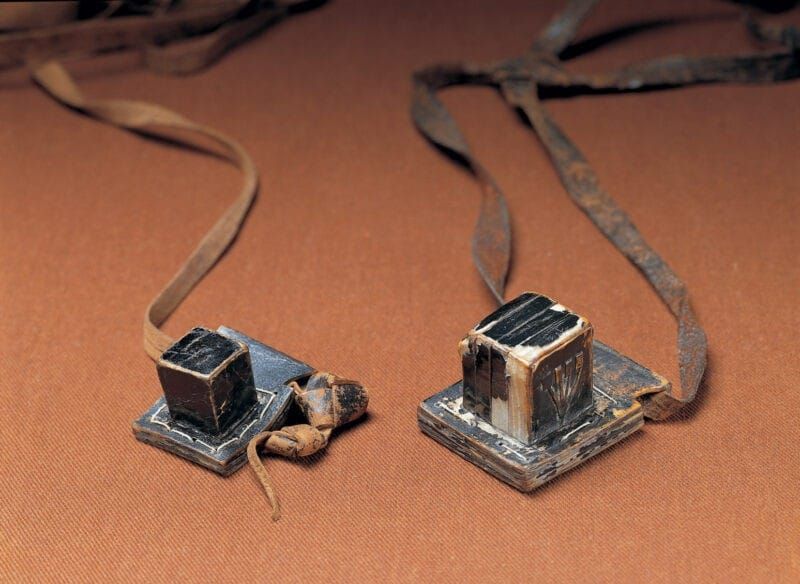
Then, from within a dusty cupboard, he produces a pair of weathered black boxes, with leather straps faded from the memories they bore, and tztizis with wool frayed from the body it wore.
“These were my father's,” the man says, and I knew they had not felt skin for decades. “Take them, for I am old, and they will have more use with you than I.”
Indeed, 80 years had passed, I learn, since they had bound the man's father in Auschwitz. Though the rest of the family escaped and crossed the Italian Alps, their patriarch died in the inferno.
The survivor’s name was Chaim — for when a group of Polish refugees hid in a forest in 1942, some had feared the small boy would cry and ruin their cover, so they wanted to abandon him; but his mother refused, and those who fled perished in a nearby meadow at the hands of the Nazis.
So the boy's family called him Chaim, for their lives he had shielded on that wintry night in Czechoslovakia.
I stare at the bundle of leather and wool he hands me, and wonder what is more imprisoned, the Godliness trapped within those boxes, or the face cloaked in pain, that gazes at a photograph of his only children, who married non-Jewish women.
After leaving the house of a man I do not know, and slipping back to this world, I could not help but think that Chaim's father had left life for the living, despite the sorrow that emitted from those eyes.
So too, the soul must enter a house she does not know, to search in darkness for conduits passed down, and after 80 years of uncertainty, she slips back to the World of Truth, only to realize that somehow there lay more freedom in leather boxes in Auschwitz.